
The highest paying trade jobs in 2026 aren’t the hardest ones. They’re ones even lazy people could do. When people hear the trades, they picture heavy lifting, smelling like and long days in the weather, grinding themselves just to earn a decent paycheck. But there’s an entire category of trade jobs companies are desperate to sell that don’t work like that at all. Don’t get me wrong, when I say lazy, I mean low physical strain, systembased work, where technology and process do most of the heavy lifting. I saw this firsthand after spending over a decade in property management and maintenance working directly with the trades, utilities, and infrastructure teams. The people who were calm, steady, and well- paid weren’t working harder. They were working in the right jobs. The ones burned out and stuck were usually doing the hardest physical work with no plan to move up. The reason the pay keeps climbing in these jobs is simple. Demand keeps rising and almost no one is lining up to fill them. These companies aren’t desperate because the jobs are bad. They’re desperate because most people don’t even know these roles exist. Some of these jobs are very boring dayto-day, but that boring is exactly why they’re stable, overlooked, and quietly paying insane money.

So, in this article, I’m breaking down the trade jobs that are desperate for workers in 2026, pay extremely well, and don’t require you to wreck your body to make a decent living. I’ll explain what each job actually does, why companies can’t hire fast enough, and how having basic HVAC, electrical, or plumbing knowledge can actually give you a massive edge, even when the job title doesn’t sound like a trade job at all.
Job Number One: Utility Meter Technician
You’re not installing meters on roofs in the rain. You’re testing, calibrating, and maintaining the systems that measure electricity, gas, and water usage. Most of this work happens in controlled environments like meter shops, testing labs, or during scheduled site visits. Pay starts around 45 to 55,000 for entry-level positions. With experience and certification, you’re looking at $65 to $85,000.
Demand is surging because utilities are replacing old analog meters with smart meters across the country. Millions of units need testing, programming, and field verification. Most companies can’t find enough people who understand basic electrical theory and can follow technical procedures.

The upside: utility jobs come with pension plans. Real pensions, strong union protection, predictable schedules, and overtime whenever you want it. The barrier to entry is low. Most utility companies will train you if you have a high school diploma and pass a basic aptitude test. Courses in electrical or mechanical work accelerate the process. Perfect for someone who likes technical work, stability, and repetitive tasks done with precision. Skip if you need constant variety.
Job Number Two: Fire Alarm Inspector
You’re not fighting fires, you’re testing systems. Fire alarm inspectors verify detection and suppression systems work properly in commercial buildings. You test smoke detectors, pull stations, sprinklers, and control panels. Then document everything and file reports with the fire marshall.
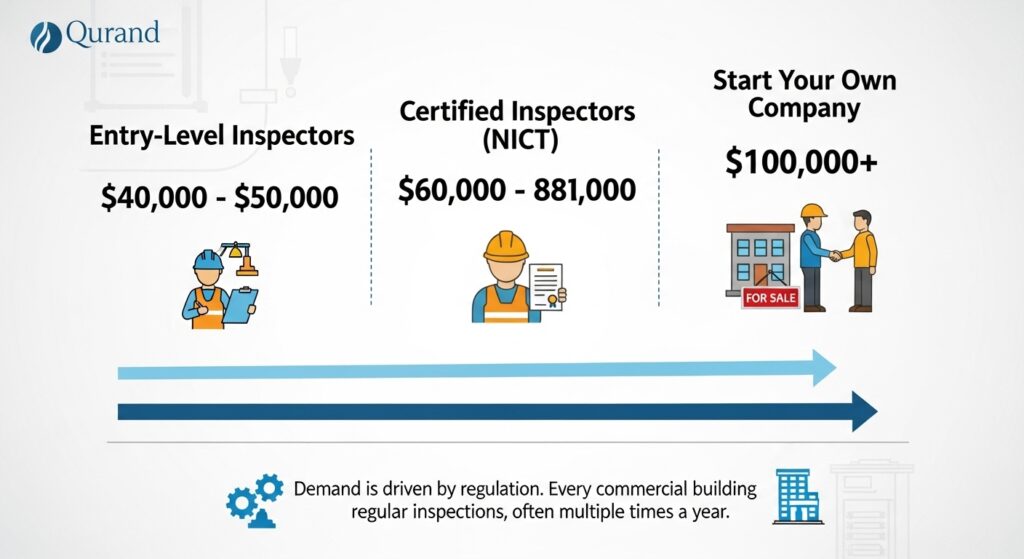
Entry-level inspectors make 40 to 50,000. Certified inspectors with NICT credentials earn 60 to 80,000. Starting your own inspection company can earn $100,000+. Demand is driven by regulation. Every commercial building requires regular inspections, often multiple times a year.
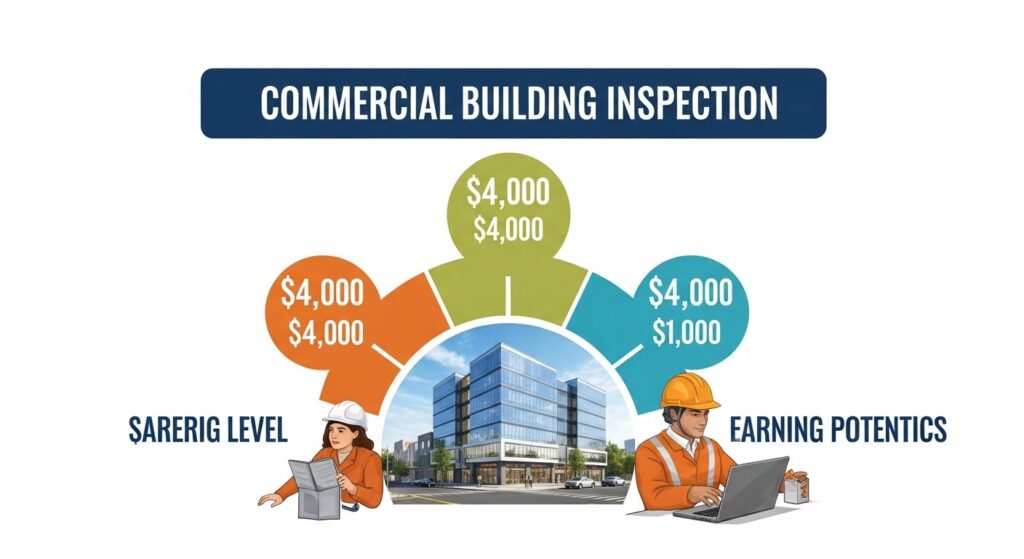
Upside: schedule control. Book your own inspections, plan your route. Work is mostly daytime, weekdays, minimal emergency callouts. Physical demand is minimal: walking buildings, climbing ladders occasionally, and doing visual and functional tests. Barrier: NICT level one or two certification. Study takes 3–6 months, faster with electrical, HVAC, or building systems background. Ideal for someone who likes independence, paperwork, and scalable business. Skip if you hate routine testing or commercial buildings.
Career Help
Many are stuck because they lack a degree or don’t know the day-to-day. Course Careers provides a free intro course that breaks down careers, daily tasks, and fit. First step: career discovery. Second step: acquire skills needed for day-one performance. Full courses include resume positioning, interview prep, and pitching to employers. Free intro course gives clarity without committing to trade school or college debt. AI career counselor helps determine the best path for your background.
Job Number Three: Parking Garage Systems Technician
Maintain automated parking systems like gates, pay stations, access control, and sensors. Troubleshoot mechanical, electrical, and basic IT issues. Pay starts $40–50,000 entry-level; experienced $60–75,000; high-cost cities $80,000+. Demand: aging parking infrastructure, airports, hospitals, universities, downtown garages.
Upside: variety without heavy lifting. Barrier: minimal, training provided. Ideal for someone who likes solving puzzles and driving between sites. Skip if you need routine or structured hours.
Job Number Four: Water Treatment Plant Operator
Monitor and control systems that make drinking water safe. Adjust chemical dosing, test water quality, monitor flow, log for compliance. Entry-level 40–50,000; Class C/B 55–70,000; Class A 75–95,000. Demand: regulation and retirement, aging workforce.
Upside: stability, pensions, shift differentials. Barrier: state certification, typically 6–12 months. Background in chemistry/environmental/industrial processes accelerates. Ideal for security, technical work, shift work. Skip if you can’t handle repetitive monitoring or industrial environments.
Job Number Five: Building Automation Technician
Program and maintain systems controlling HVAC, lighting, energy in commercial buildings. Use software platforms for optimization. Laptop-focused, minimal ladder work. Entry 50–60,000; certified 70–90,000; senior 100,000+. Demand: smart buildings and retrofits.
Upside: IT skill growth transferable to IT roles. Barrier: understanding HVAC basics, electrical theory, building schematics. Ideal for tech-minded who want trades without heavy lifting. Skip if unwilling to learn new software continuously.

Job Number Six: Gas Control Room Operator
Monitor natural gas pipelines from control centers. Track pressure, flow, alerts. Adjust valves, notify crews, shut down sections. Entry-level 55–65,000; experienced 75–95,000; senior 120,000+. Demand: infrastructure growth, workforce shortage.
Upside: climate-controlled, union backing, shift differentials, pensions. Barrier: background checks, aptitude test, training. Ideal for focus, reliability, rotating shifts. Skip if you need physical activity or can’t handle high responsibility.
Job Number Seven: Railroad Signal Operator
Control train traffic from dispatch center. Monitor track, switch signals, coordinate movements. Entry 50–60,000; certified 70–85,000; senior 90–110,000. Demand: freight and passenger rail expansion.
Upside: federal jobs, benefits, pensions, overtime, union protection. Barrier: federal railroad training, certification. Military/logistics experience helpful. Ideal for coordination, shift work, long-term security. Skip if you can’t handle irregular schedules or live traffic stress.
Job Number Eight: Pipeline Controller
Remotely monitor oil, gas, or water pipelines using Scattera software. Track flow, pressure, system performance. Entry 60–75,000; experienced 85–105,000; senior 110–130,000. Demand: aging and expanding pipelines.
Upside: energy companies, bonuses, stock options, retirement benefits. Barrier: Scattera training, background checks. Ideal for high responsibility, data-focused. Skip if you can’t manage infrastructure impacting millions.
Job Number Nine: Scattera Technician
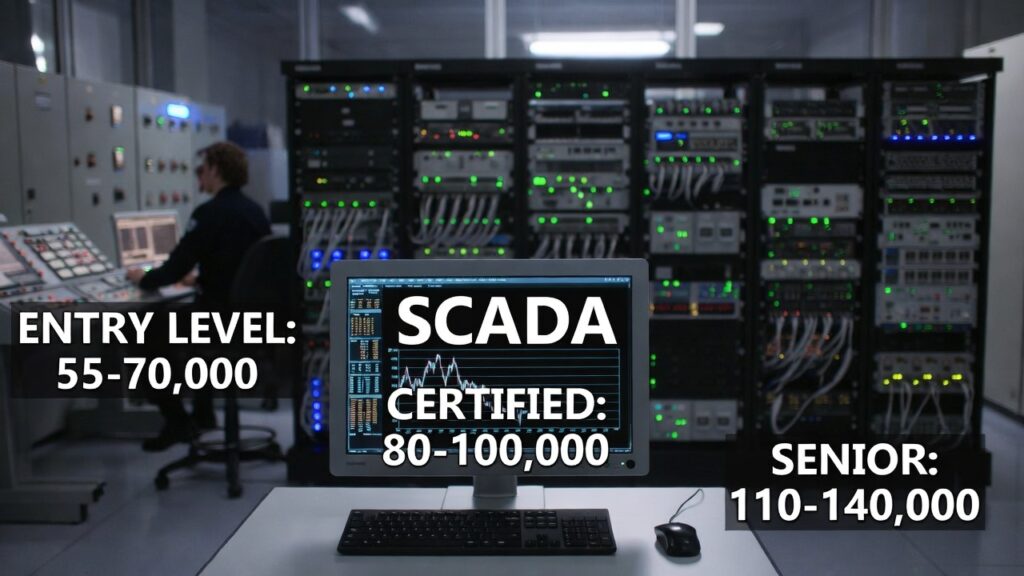
Install, configure, maintain systems monitoring and controlling industrial processes (SCADA). Entry 55–70,000; certified 80–100,000; senior 110–140,000. Demand: industrial upgrades, IT and industrial knowledge shortage.
Upside: transferable skills across water, energy, manufacturing, transportation. Barrier: networking, programming, industrial controls, electrical schematics. Ideal for complex technical work, high earning, continuous learning. Skip if uncomfortable with IT and industrial systems.
Job Number Ten: Utility Dispatcher
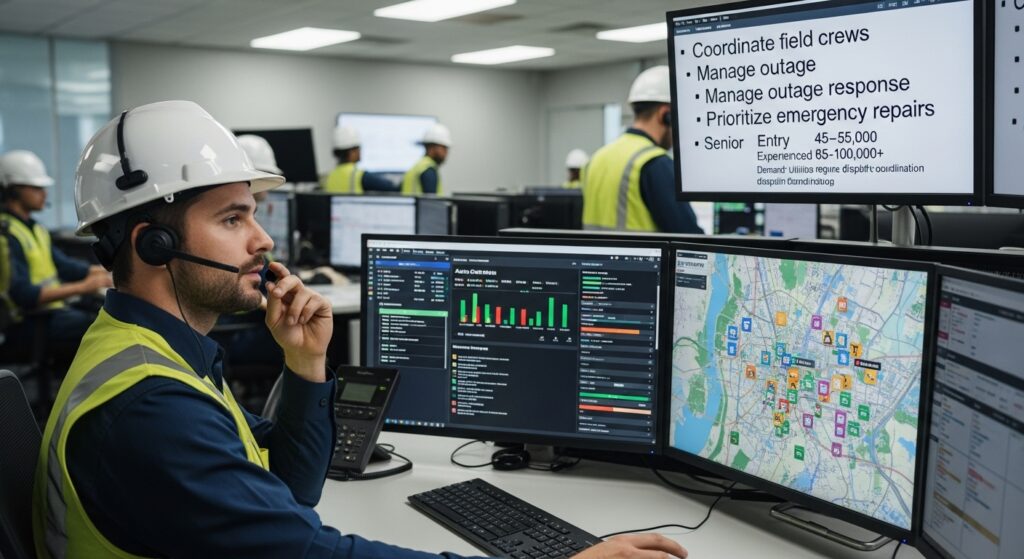
Coordinate field crews, manage outage response, prioritize emergency repairs. Entry 45–55,000; experienced 65–80,000; senior 85–100,000+. Demand: utilities require dispatch coordination.
Upside: job security, benefits, overtime, pensions, union protection. Barrier: training, background checks. Ideal for coordination, calm under pressure, stability. Skip if stress during outages or shift work is unsuitable.
Conclusion
10 trade jobs desperate for workers, pay well, and don’t require destroying your body. Most people never hear about these roles. Use Course Careers’ free AI career counselor to explore, get clarity, and start a path that fits your skills and interests. $50 discount available for full courses.
Which one surprised you the most or would you never do?